
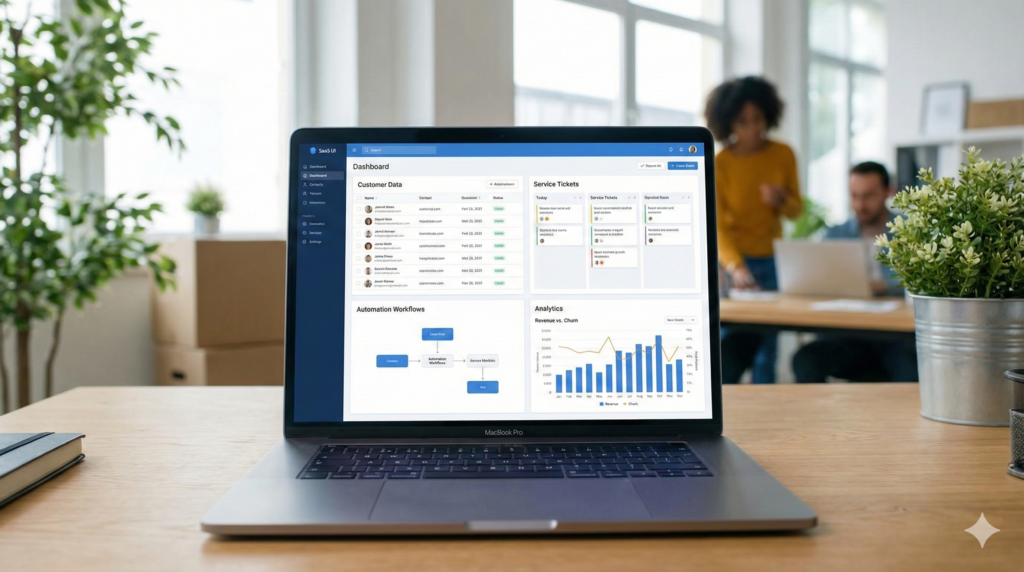
What is CRM and how it works is one of the most important questions for modern businesses. As customer expectations grow, managing relationships manually is no longer effective—especially for service-based businesses.
This is where CRM software plays a vital role. It helps businesses organise customer data, improve communication, and deliver better service experiences.
In this blog, you’ll clearly understand what CRM is, how it works, and the real benefits of CRM software for service businesses.
What Is CRM?
CRM stands for Customer Relationship Management. It is a system that helps businesses manage customer interactions, sales activities, and service processes in one centralised platform.
CRM software stores all customer-related information, such as:
- Contact details
- Communication history
- Service requests
- Follow-ups and reminders
Instead of scattered spreadsheets or notebooks, everything is available in one place.
What is CRM, and how does it work?
To understand what is CRM and how it works, think of CRM as the digital brain of your business.
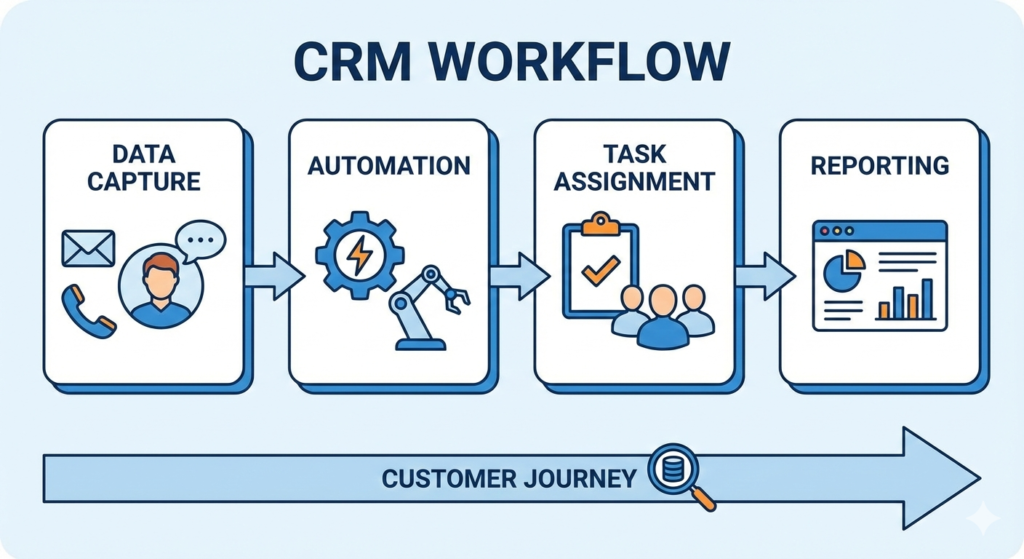
How CRM Works Step by Step
- Data Collection
CRM collects customer data from websites, calls, emails, forms, and social media. - Centralized Storage
All customer information is stored securely in a single dashboard. - Automation
CRM automates follow-ups, reminders, emails, and task assignments. - Tracking & Monitoring
Sales, service requests, and customer interactions are tracked in real time. - Reporting & Insights
CRM generates reports that help businesses improve performance and decision-making.
This process ensures no lead or customer is ignored.
Why Service Businesses Need CRM Software
Service businesses rely heavily on trust, communication, and timely responses. Missing a follow-up can mean losing a customer permanently.
CRM software helps service businesses:
- Respond faster
- Deliver personalised service
- Maintain long-term relationships
- Increase repeat business
Benefits of CRM Software for Service Businesses
1. Better Customer Management
All customer details are organised and easily accessible, improving service quality.
2. Faster Response Time
Automated reminders ensure no service request or inquiry is missed.
3. Improved Customer Experience
Personalised communication builds trust and loyalty.
4. Increased Productivity
Teams spend less time managing data and more time serving customers.
5. Higher Customer Retention
Satisfied customers are more likely to return and recommend your services.
CRM Software for Different Service Industries

CRM software is useful for:
- Healthcare clinics
- IT service providers
- Consultants
- Maintenance & repair services
- Education & coaching institutes
Each service business benefits from structured customer data and automation.
CRM vs Traditional Customer Management
| Feature | CRM Software | Manual Management |
|---|---|---|
| Data storage | Centralized | Scattered |
| Follow-ups | Automated | Manual |
| Reporting | Real-time | Limited |
| Scalability | High | Low |
CRM clearly offers a smarter way to manage service operations.
Common Mistakes Businesses Make Without CRM
- Forgetting customer follow-ups
- Losing customer history
- Poor team coordination
- No data-driven decisions
CRM software eliminates these risks.
How to Choose the Right CRM for a Service Business
1. Ease of Use
Choose a CRM that your team can adopt quickly.
2. Automation Features
Look for reminders, follow-ups, and workflow automation.
3. Customisation
Service workflows should be customizable.
4. Integration
CRM should integrate with email, WhatsApp, and billing tools.
FAQs
1. What is CRM, and how does it work?
CRM is a system that collects, stores, and manages customer information. It works by automating follow-ups, tracking interactions, and improving communication across teams.
2. Why is CRM important for service businesses?
Service businesses depend on timely communication and customer trust. CRM helps manage customers efficiently and improves service quality.
3. Is CRM software expensive?
Many CRM tools offer affordable plans suitable for small and medium-sized service businesses.
4. Can CRM improve customer satisfaction?
Yes. CRM enables personalised communication and faster responses, which increases customer satisfaction.
5. How long does CRM implementation take?
Basic CRM setup can be completed within a few days, depending on customisation needs.
Conclusion: Why CRM Is Essential for Service Businesses
Understanding what is CRM and how it works helps businesses realise its true value. CRM software is not just a tool—it is a long-term growth system.
The benefits of CRM software for service businesses include better customer relationships, higher efficiency, and sustainable growth.
👉 Start using CRM today to deliver better service and build lasting customer trust.
🚀 Ready to Get Started with CRM?
Turn better customer management into real business growth with the right CRM solution.
Get expert guidance tailored to your business needs.
📧 Email: info@websicon.in
📞 Call: +91 8770954523
👉 Contact us today and take the next step toward smarter customer relationships.